If you are launching a handbag brand, expanding your product line, or sourcing bags for a retail program, China remains the world's most capable hub for private label handbag manufacturing. With decades of craftsmanship infrastructure, integrated supply chains for leather and hardware, and factories that serve everyone from emerging DTC labels to global luxury houses, China offers unmatched flexibility across price points and volumes.
However, sourcing from China can feel overwhelming if you are unfamiliar with the landscape. This guide distills 20 years of manufacturing experience at LuxCraft Atelier into a clear, step-by-step reference that addresses every critical decision in the private label handbag journey.
1. What Is Private Label Handbag Manufacturing?
Private label handbag manufacturing is a production model in which a factory produces handbags that carry the buyer's own brand name, logo, and design specifications. Unlike wholesale purchasing, where you resell an existing manufacturer's product under their brand, private label gives you full ownership of the brand identity, design details, materials, and customer experience.
There are two common sub-models within private label manufacturing:
- OEM (Original Equipment Manufacturing): The buyer provides complete design specifications, tech packs, or reference samples, and the factory produces exactly to those specs. This is the most common model for established brands with defined aesthetics.
- ODM (Original Design Manufacturing): The factory provides existing designs or silhouettes, and the buyer customizes them with their own materials, hardware, branding, and colorways. This model is ideal for emerging brands that want a head start without investing in original pattern development.
At LuxCraft Atelier, we support both OEM and ODM workflows. Buyers can bring us technical drawings and spec sheets, or they can select from our library of proven silhouettes and customize them to match their brand positioning. Either way, every bag ships under the buyer's brand with no reference to our factory.
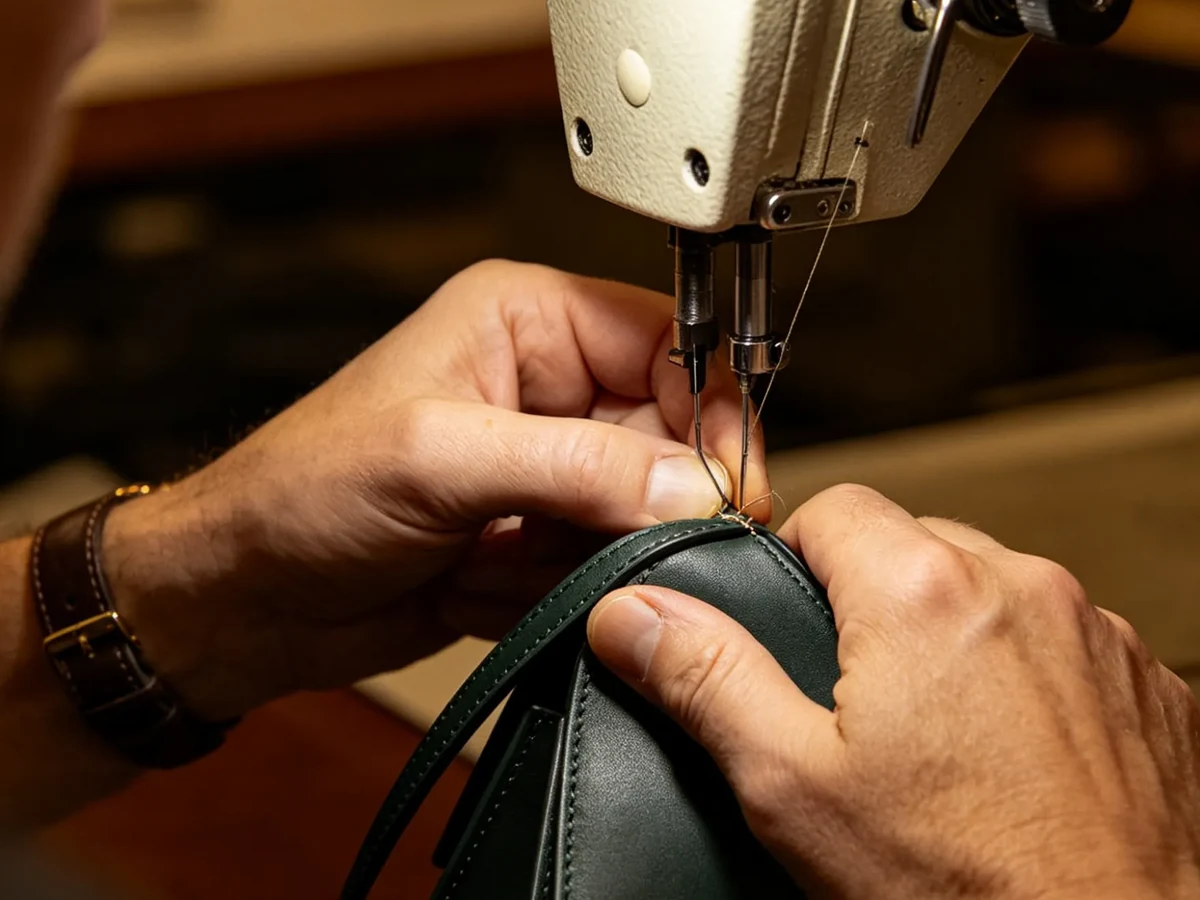
A strong private label partner does not just execute your designs; they help you refine them for production reality, cost efficiency, and market relevance.
For a deeper look at how to communicate your requirements effectively, read our guide on how to request a quote that matches your market.
2. Why China Remains the Leading Choice for Handbag Manufacturing
Despite rising interest in alternative sourcing destinations like Vietnam, India, and Bangladesh, China continues to dominate global handbag manufacturing for several structural reasons:
Integrated Supply Chain
China's handbag industry benefits from vertically integrated supply chains where leather tanneries, hardware foundries, lining mills, zipper manufacturers, and packaging suppliers are concentrated in the same industrial regions (notably Guangdong, Zhejiang, and Fujian). This proximity reduces lead times, lowers logistics costs, and enables faster iteration during sampling.
Craftsmanship Depth
China has invested decades in building handbag-specific craftsmanship capabilities. From edge painting and burnishing to skiving, French seam construction, and hardware setting, Chinese factories offer skill levels that rival European workshops at significantly lower cost structures. Many senior craftsmen in established factories have 15 to 25 years of handbag-specific experience.
Scalability
A single factory can handle orders ranging from 100 pieces (for test batches) to 50,000+ pieces per month for established programs. This scalability means your manufacturing partner can grow with your brand rather than forcing you to switch suppliers as volumes increase.
Material Access
Chinese factories have access to one of the world's largest leather markets, sourcing full-grain, top-grain, and specialty leathers from domestic tanneries as well as imports from Italy, Argentina, and Brazil. For buyers seeking certified materials, many factories can provide REACH-compliant, AZO-free, and SGS-tested materials on request.
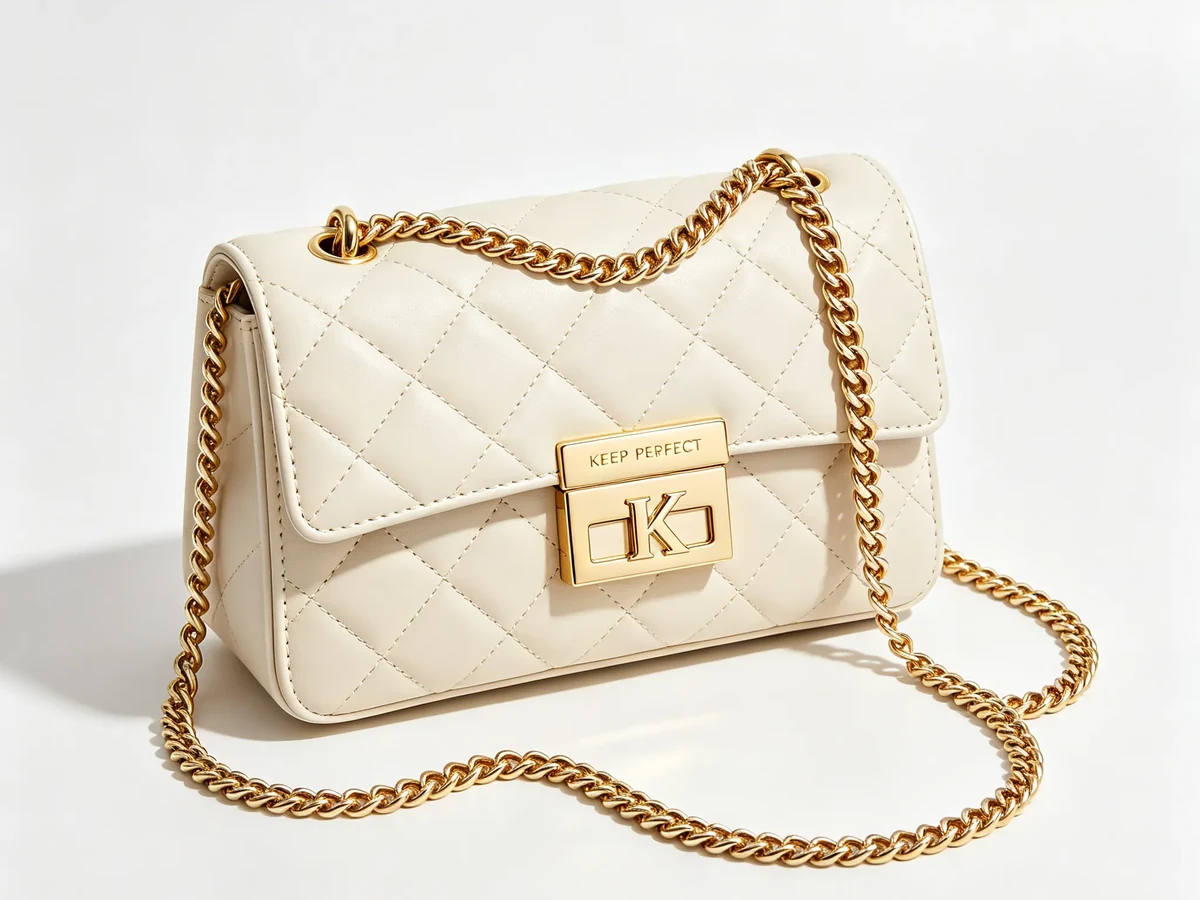
Understanding the full range of customization available is critical. Explore LuxCraft's capabilities to see the material, hardware, and branding options available for your program.
3. How to Choose the Right Handbag Factory
Selecting the right manufacturing partner is the single most consequential decision in your handbag sourcing journey. A good factory accelerates your brand's growth; a poor one creates costly delays, quality inconsistencies, and reputational risk.
Key Evaluation Criteria
- Specialization: Prefer factories that specialize in handbags specifically, not general "bags and luggage" manufacturers. Handbag construction requires different skills than backpack or tote bag production.
- Experience with Your Target Market: A factory experienced in European luxury positioning will have different capabilities than one focused on mass-market fast fashion. Ask about their current client mix and target price points.
- Certifications: Look for ISO 9001 (quality management), BSCI (social compliance), and SGS testing capabilities. These are not just badges; they reflect systematic processes that protect your investment.
- Sample Quality: Always evaluate a factory's capability through samples before committing to production. The sample stage reveals stitching quality, edge finishing, hardware alignment, and material grading that marketing materials cannot convey.
- Communication: Responsive, detailed communication during the inquiry stage is a strong predictor of production reliability. Factories that are slow or vague during pre-sales typically become more difficult during production.
- Quality System: Ask specifically about their QC workflow. Do they use spec locks? First-article approvals? In-line inspections? Pre-shipment audits? A structured quality system is non-negotiable for private label programs.
For a practical checklist of questions to ask potential suppliers, see our article on supplier evaluation questions that reveal real capability.
| Evaluation Area | What to Look For | Red Flags |
|---|---|---|
| Factory age | 10+ years in handbag production | Cannot provide founding date or factory history |
| Certifications | ISO 9001, BSCI, SGS reports | No certifications or refuses to share |
| Sample willingness | Happy to produce paid samples | Insists on bulk order before sampling |
| QC documentation | Written quality procedures, spec sheets | Verbal-only quality promises |
| Client references | NDA-protected case studies or testimonials | Name-drops brands without evidence |
| Responsiveness | Reply within 24 business hours | Weeks of silence or vague answers |
4. Understanding Handbag Materials
Material selection directly impacts your product's perceived value, retail price positioning, durability, and customer satisfaction. China's handbag industry offers a broad material spectrum, from commodity PU to premium full-grain leather.
Leather Tiers
- Full-Grain Leather: The outermost layer of the hide with natural grain intact. The highest quality leather available, prized for its strength, texture, and ability to develop a patina over time. Ideal for luxury positioning at retail prices above $200.
- Top-Grain Leather: Sanded or buffed to remove surface imperfections, then embossed or finished. Slightly lower cost than full-grain but still premium. Widely used in mid-to-high-end private label programs.
- Split Leather (Suede): The lower layer of the hide, separated from the top grain. Commonly used for suede finishes. More affordable but less durable than top-grain.
- Genuine Leather: Technically real leather but from the lowest layers. Often used in budget programs. Lower perceived value and significantly less durable than higher grades.
Non-Leather Materials
- PU Leather (Polyurethane): Synthetic leather with increasingly realistic textures. High-quality PU can closely mimic genuine leather at a fraction of the cost. Popular for vegan-friendly lines.
- Microfiber: Advanced synthetic material with soft hand-feel and good durability. Used in many mid-market programs as a leather alternative.
- Canvas and Fabric: Cotton canvas, nylon, or polyester blends. Used for casual, travel, or eco-positioned lines.
For a detailed breakdown of material tiers and how they affect retail positioning, read our material tiers guide.
5. MOQ, Pricing, and Payment Terms
Understanding the commercial terms of private label handbag manufacturing helps you budget accurately and avoid surprises during production.
Minimum Order Quantity (MOQ)
Most established Chinese handbag factories require 100 to 300 pieces per style per color. The MOQ exists because each style requires dedicated pattern cutting, thread setup, and hardware allocation. Below certain volumes, the per-unit setup cost makes production uneconomical for both parties.
At LuxCraft Atelier, we set our MOQ at 100 pieces per style per color. This is deliberately accessible for emerging brands testing their first collection, while still efficient enough for established programs. We also offer trial orders of 50 pieces for qualified buyers evaluating a new factory relationship.
Pricing Structure
Handbag pricing depends on materials, construction complexity, hardware, branding applications, and order volume. As a general reference:
| Material Tier | FOB Price Range | Suggested Retail |
|---|---|---|
| PU / Microfiber | $15 - $35 | $49 - $120 |
| Split Leather / Genuine Leather | $30 - $55 | $89 - $180 |
| Top-Grain Leather | $50 - $90 | $150 - $350 |
| Full-Grain Leather | $80 - $150+ | $250 - $600+ |
These are factory FOB (Free On Board) prices. You will also need to budget for shipping, import duties, packaging, and branding accessories. Volume discounts typically apply at 500+ and 1,000+ piece thresholds.
Payment Terms
Standard payment terms in China's handbag industry are 30% deposit upon order confirmation, with 70% balance due before shipment (via T/T wire transfer). For larger orders above USD 50,000, letter of credit (L/C) at sight is commonly accepted. Avoid factories that demand 100% upfront payment.
6. The Sampling Process
Samples are the most important quality checkpoint before committing to bulk production. A well-managed sampling process protects you from costly production errors and ensures the final product matches your brand standards.
Typical Sampling Workflow
- Inquiry and Brief (Day 1-3): You share your design references, target materials, quantity, and branding requirements. The factory responds with a feasibility assessment and quotation.
- Sample Development (Day 7-15): The factory produces a sample based on your specifications. First samples may differ slightly from final production as the factory refines the pattern.
- Review and Feedback (Day 16-20): You evaluate the sample for proportions, materials, stitching, hardware, and overall quality. You provide written feedback with photos or annotated images.
- Revision Sample (Day 21-30): The factory produces a revised sample incorporating your feedback. Most programs require 2 to 3 rounds of sampling.
- Golden Sample Approval (Day 30-40): Once both parties agree, you approve the final "golden sample" which becomes the production reference standard.
The entire sampling phase typically takes 3 to 6 weeks. Factor this into your product launch timeline. Rush sampling is available at most factories for an additional fee, typically reducing lead time by 30 to 50%.
7. Quality Control Systems
Quality control is where experienced factories separate themselves from unreliable ones. A robust QC system ensures that every bag in your order matches the approved sample and meets your brand standards consistently across reorders.
LuxCraft Atelier operates a 6-step quality system designed specifically for private label handbag programs:
- Spec Lock: Before production begins, all specifications are documented and locked, including materials, dimensions, stitching counts, edge finishes, hardware tone, and packaging requirements. This prevents scope drift during production.
- First Article Approval: The first bag off the production line is compared against the golden sample. Any deviations are corrected before the line continues. This is your most critical checkpoint.
- In-Line Inspection: QC staff conduct spot checks during cutting, stitching, and assembly. This catches issues early when they are still correctable without scrapping finished bags.
- End-of-Line Inspection: 100% inspection of finished bags for programs requiring AQL 2.5 or higher standards. Each bag is checked for stitching consistency, edge quality, hardware alignment, and dimensional accuracy.
- Pre-Shipment Audit: Random sampling per ISO 2859-1 standards to verify the overall batch meets quality thresholds before packaging and shipping.
- Packaging Check: Final verification that dust bags, boxes, labels, hang tags, and shipping marks match your specifications and that bags are protected for transit.
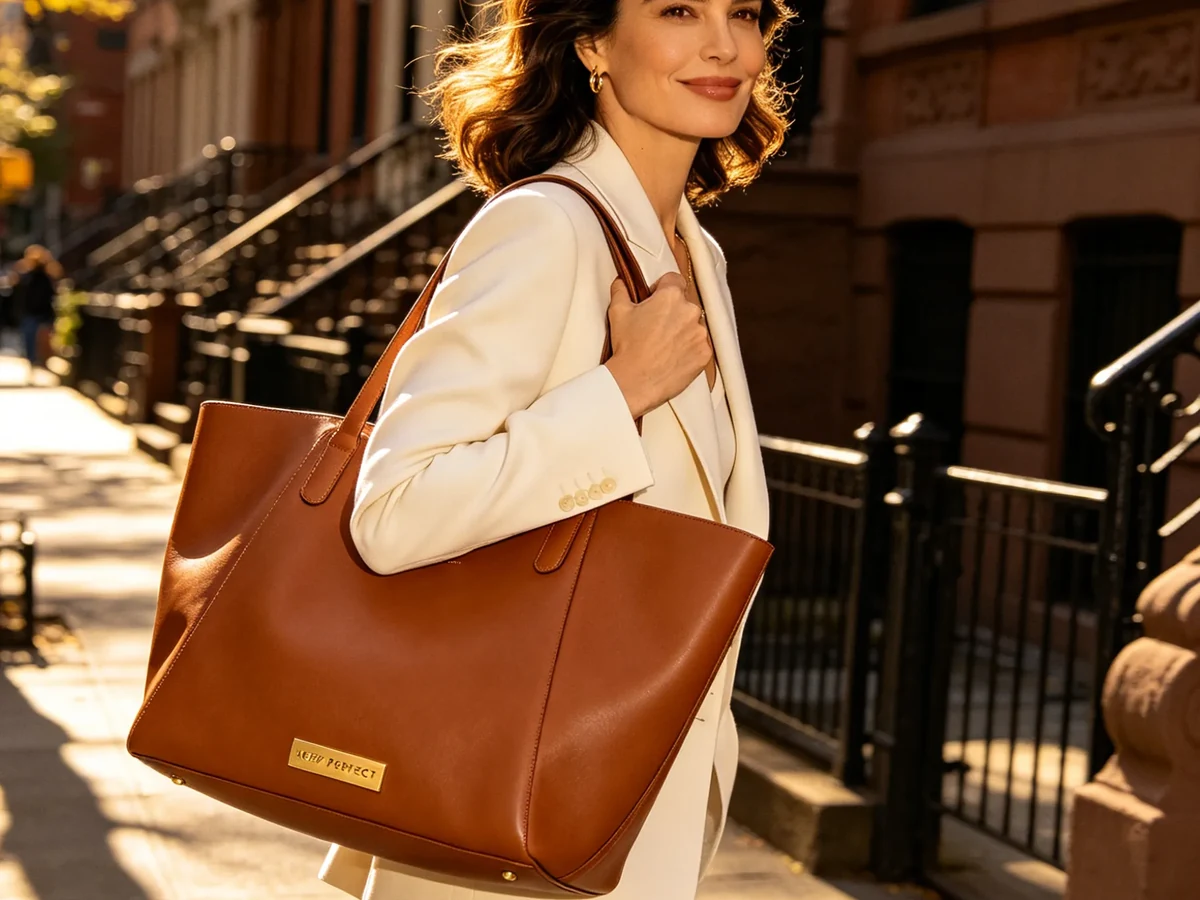
For more on the specific quality patterns that experienced buyers look for, see our proof and quality evidence page and our blog article on quality systems for private label handbags.
8. Branding and Customization Options
Private label manufacturing gives you extensive control over every visible and tactile element of the product. Here are the most common branding applications available at Chinese handbag factories:
| Branding Method | Description | Best For |
|---|---|---|
| Debossing | Logo pressed into leather surface, creating a recessed impression | Luxury, understated branding |
| Hot Stamping | Foil-stamped logo in gold, silver, or custom color | Visible brand identity with premium feel |
| Metal Logo Plates | Custom-cast metal plates riveted or sewn onto the bag | High-end positioning, strong brand recognition |
| Embroidery | Thread-stitched logo on exterior or interior | Casual, artisanal brand aesthetics |
| Custom Hardware | Logo engraved on zipper pulls, buckles, feet, and clasps | Cohesive branded experience throughout |
| Printed Lining | Custom monogram or pattern printed on interior fabric | Hidden luxury, interior brand moments |
| Woven Labels | Small branded labels sewn into interior seams | Standard brand identification |
The choice of branding method communicates different brand values. Debossing and subtle metal plates signal quiet luxury, while bold hot stamping and visible hardware say something different. Think about your target customer and retail positioning before selecting branding applications.
For insight into how hardware tone and finish affect buyer perception, read our guide on hardware and logo tone details.
9. Handbag Categories and Product Planning
Most private label handbag programs launch with 3 to 6 styles across complementary categories. The most popular categories for private label programs include:
- Tote Bags: The highest-volume category globally. Structured totes with clean lines and quality leather are the foundation of most private label collections.
- Crossbody Bags: Compact, hands-free bags with adjustable straps. Strong demand across all markets, especially in Asia and the Middle East.
- Shoulder Bags: Versatile day-to-evening silhouettes. One of the most commercially flexible categories.
- Satchel Bags: Classic structured shapes with flap closures and hardware details. Timeless appeal, especially in leather.
- Clutch Bags: Evening and occasion pieces. Lower production cost per unit but seasonal demand patterns.
- Weekender/Travel Bags: Oversized bags with travel-ready functionality. Growing category driven by experiential luxury trends.
Explore the complete range of categories available for customization in LuxCraft's collections. Each category supports full OEM/ODM customization in materials, hardware, colors, and branding.
10. Shipping and Logistics
Shipping from China to your destination market is a significant component of both cost and timeline. Here is a practical overview:
Shipping Methods
| Method | Transit Time | Cost | Best For |
|---|---|---|---|
| Sea Freight (FCL) | 20-35 days | Lowest per-unit cost | Bulk orders, 500+ pieces |
| Sea Freight (LCL) | 25-40 days | Moderate | Smaller orders, 100-499 pieces |
| Air Freight | 5-10 days | High | Urgent restocks, sample shipments |
| Express (DHL/FedEx) | 3-7 days | Highest | Samples, small urgent orders |
For most private label programs, sea freight offers the best cost-to-time ratio. Plan your product launch calendar to accommodate 4 to 8 weeks of shipping time, plus customs clearance (typically 3 to 7 days). Factor in import duties, which vary by destination country and material type.
11. Common Mistakes to Avoid
After two decades of working with international private label buyers, we have identified recurring mistakes that create unnecessary cost, delay, and frustration:
- Skipping the sample stage: Never place a bulk order without approving a physical sample. Marketing photos cannot replace hands-on evaluation of materials, weight, and construction.
- Vague specifications: "Good quality" is not a specification. Provide exact measurements, material references, Pantone colors, hardware finish details, and stitching requirements.
- Choosing on price alone: The cheapest quote often reflects material downgrades, reduced stitch counts, or eliminated QC steps that will cost you more in returns and brand damage.
- Ignoring packaging: Packaging protects your product during shipping and creates the first physical impression of your brand. Invest in proper dust bags, tissue, and boxes.
- Not planning for reorders: Your first order is a test. Your second and third orders build your brand. Choose a factory that maintains material stock and spec documentation for fast, consistent reorders.
- Underestimating timelines: From inquiry to delivery, a private label handbag program typically takes 3 to 5 months. Rushing any stage compromises quality.
12. Frequently Asked Questions
What is the typical MOQ for private label handbags?
Most factories require 100 to 300 pieces per style per color. LuxCraft Atelier's MOQ is 100 pieces per style per color, with trial orders of 50 pieces available for qualified new buyers.
How long does sampling take?
First samples typically take 7 to 15 business days. Plan for 2 to 3 sampling rounds over 3 to 6 weeks before final approval and bulk production.
What is the total lead time from order to delivery?
From order confirmation to port arrival, expect 30 to 45 business days for production plus 20 to 35 days for sea freight. Total timeline is approximately 3 to 4 months including sampling.
Can I visit the factory?
Yes. Factory visits are encouraged for serious buyers. LuxCraft Atelier welcomes scheduled visits at our Quanzhou, Fujian facility. We can arrange airport pickup from Quanzhou Jinjiang International Airport.
Do you offer eco-friendly or vegan materials?
Yes. We offer PU leather, microfiber, and certified eco-materials including REACH-compliant options for European markets. Vegetable-tanned leather is also available upon request.
What payment methods do you accept?
We accept T/T (bank transfer) with 30% deposit and 70% before shipment. For orders above USD 50,000, L/C at sight is also accepted.
Ready to Start Your Private Label Program?
Share your brand vision, target market, and initial requirements. We will respond within 24 business hours with a feasibility assessment and quotation.
Request a Private Quote13. Conclusion
Private label handbag manufacturing in China offers an unmatched combination of craftsmanship, material access, scalability, and cost efficiency. The key to success lies in choosing the right factory partner, investing in thorough sampling, establishing a structured quality system, and planning realistic timelines.
At LuxCraft Atelier, we have spent 20 years perfecting this process for private label brands, boutiques, and retail buyers around the world. Our 100-piece MOQ, structured quality system, and responsive communication make us a reliable partner whether you are launching your first collection or scaling an established program.
If you are ready to explore what is possible, reach out to our team with your brand direction and initial requirements. We will respond within 24 business hours with honest, detailed guidance on how to bring your vision to market.